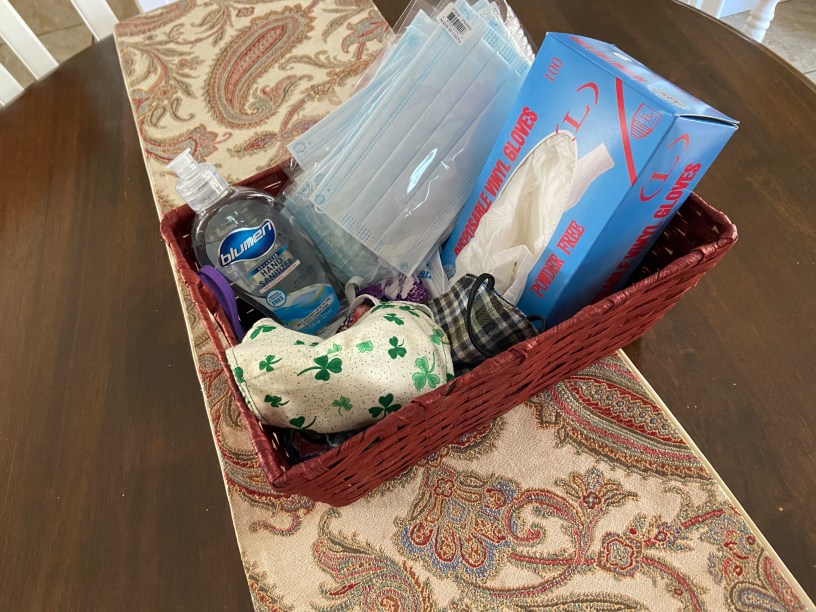
Over a century ago, the Spanish Flu hit the United States. For the first time since then, the country is experiencing a pandemic of similar magnitude. Anger, fear, and uncertainty; all of these emotions describe this COVID-19 era that we are living through. For almost everyone, this is the first time that they have to stay home for an indefinite period of time. This is a time period that is going to significantly impact the way that we live in the future.
History tends to repeat itself. With that being said, we can learn from history about how we will live here on out. In 1918, the Spanish Flu killed more than 500,000 people in the United States alone. Today, COVID-19 has only killed around 67,000 people but has infected north of one million. A lasting effect of the Spanish Flu was the emphasis of hygiene, “Covering your cough grew to be considered common courtesy — before the pandemic, this etiquette was almost unheard of” (Svoboda). There is going to be a shift in the mentality of many people. Hand washing and disinfecting surfaces will become generally more common. Upon meeting someone, many people shake hands without thinking. After this pandemic, that could change as more caution arises around contact with people outside of the family. While we can learn from past pandemics, we can also learn from past recessions. In 2008, our economy regressed significantly and taught us many things. Due to the slowed business, especially with small businesses, our economy is projected to take a huge hit, “Widespread bankruptcy could leave industry in a weakened state, depleted of investment and innovation” (Goodman). The global economy is expected to freeze. This will significantly impact the United States’ economy. The stock market will drop, many people will continue to be left jobless, and many companies will be left in debt or file bankruptcy. The recession in 2008, could have acted as a practice run for the upcoming recession.
The pandemic could be a blessing in disguise. It could be showing us how we should be living. For the first time in a very long time, our cities are not crowded and polluted, and the general health of our nation, aside from COVID patients, is well. We can, however, use the pandemic to refresh and fix our nation’s problems, “If many companies have been forced to try out teleworking, should they not, once the emergency is over, move on to offer their workers flexible systems that allow them to work from home…” (Dans). Working from home during the pandemic has worked very efficiently. Changing the dynamic of the way people work can significantly reduce problems. Allowing people to work from home after the pandemic can reduce many factors like rush hour traffic and accidents that occur from it, crowded cities and urban areas, and even general pollution coming from cars. We can also use this opportunity to change health care, “They [digital health solutions] are ready-made options to bring healthcare to patients, rather than the other way round” (“Life after COVID-19: What Will Change?”). Digital health solutions like apps, or video calls with doctors, can report medical results right to doctors which eliminates the need for doctor-patient contact. We can not only save the general health of patients, by keeping them out of doctors’ offices but save the general health of doctors, by interacting with fewer people.
The next generations will be learning about this time period in their history classes. So, take in what is such a unique situation we are living through. We should also use this time to address what needs to be fixed post-pandemic and act on it, instead of selfishly gathering in large crowds to protest social distancing regulations. After all, we succeed if we work together; united we stand, divided we fall.
Works Cited
Dans, Enrique. “After The Pandemic.” Forbes, Forbes Magazine, 2 Apr. 2020, www.forbes.com/sites/enriquedans/2020/04/01/after-thepandemic/#5a8e0a2865ba.
Goodman, Peter S. “Why the Global Recession Could Last a Long Time.” The New York Times, The New York Times, 1 Apr. 2020, www.nytimes.com/2020/04/01/business/economy/coronavirus-recession.html.
“Life after COVID-19: What Will Change?” The Medical Futurist, 1 May 2020, https://medicalfuturist.com/life-after-covid-19-what-will-change/.
Svoboda, Elizabeth. “How The COVID-19 Pandemic Will Change the Way We Live.” Discover Magazine, Discover Magazine, 17 Apr. 2020, www.discovermagazine.com/health/how-the-covid-19-pandemic-will-change-the-way-we-live.
 ENGL110 Spring 2020 11:15-12:05
I really loved the positive and silver lining take that you used in your essay! First, I thought it was so interesting how you compared this pandemic to the Spanish Flu, as it was definitely a similar time to the one we are experiencing now. My favorite part of your essay was the ending, when you stated, “The next generations will be learning about this time period in their history classes. So, take in what is such a unique situation we are living through. ” I think about this all the time, and how our children and children’s children will be learning about this crazy time that we experienced! Overall, a really well thought out and interesting essay that I enjoyed reading!
-Sydnee Schapiro
LikeLike
I really like how you talked about the Spanish Flu in your introduction and in the second paragraph. My favorite sentence is, “For the first time since then, the country is experiencing a pandemic of similar magnitude. Anger, fear, and uncertainty; all of these emotions describe this COVID-19 era that we are living through.” You did a really good job at describing how mostly everybody all over the world is feeling. I can personally say that I feel those emotions.
LikeLike