
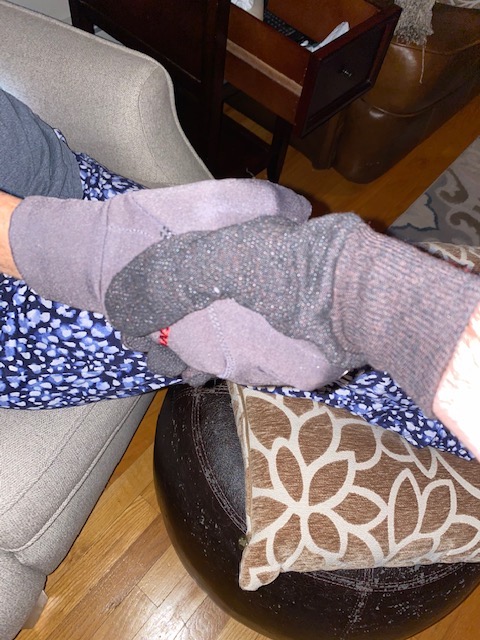
A lot has already changed in our lives due to COVID-19. While we’d like to think that everything will go back to normal after the quarantine, the reality is that some of these changes might become the norm for the rest of our lives. It’s a time where the future is uncertain, so everyone is speculating about what things we will get to enjoy again. I don’t want to discuss the prospects of big social activities like concerts or sporting events because the thought of not having things like those depresses me. However, I foresee that basic social interactions will change.
Since the quarantine began, people stopped using physical contact to greet people, aside from family members and close friends mostly. I bet that now you would be hard-pressed to find anyone shaking hands without gloves on or even at all for that matter. As an alternative to handshakes, “Canadian officials recommend an elbow bump or a friendly wave” (Katwala). Personally, I can’t see elbow bumps fully replacing handshakes. That being said, I think that a lot of people will be wary to shake hands even long after the quarantine is over.
I’m fascinated by the fact that there are different greeting customs in virtually every country. Some cultures don’t shake hands at all. The most common greeting in Thailand is called a “wai”, where each person will “place his or her palms together at chest level and bow” (Gould). While this is probably something that has been fixed in Thailand’s culture for centuries, there is no denying that it is more sanitary than handshaking and poses less of a risk for spreading diseases. That aspect of life won’t have to change for the people there.
The physical interactions between people inside of businesses has altered as well, or perhaps just intensified. All food vendors are required to wear gloves when serving customers. Being that this is something that has already been becoming the standard for restaurants before the global pandemic, I think that from this point forward it will continue for the foreseeable future. Similar to the handshaking, I think that this newly adopted practice will just become ingrained in the everyday duties of food workers. It would be silly and unhygienic to just stop wearing gloves just because the quarantine ends.
While generally the use of gloves is a smart way to prevent the spread of Covid-19, it’s easy to misuse them, and businesses will have to get educated on the matter. The problem with gloves is that if not regularly swapped with a fresh pair, they can pick up the virus from objects they touch, just like their hands. In fact, a study from back in 2004 that examined the spread of Noroviruses while preparing food showed that “hands infected with Noroviruses could infect gloves when the worker puts them on” (Bamforth). The best way to prevent this is obviously to clean your hands before putting gloves on, but it’s also safer if employees use more pairs of disposable gloves a day rather than one pair.
Overall, I think that the ripples of social distancing will be here for a long time. When things return to normal, not everyone is going to be ready to socialize comfortably as they once did. Social media and online interaction have now become more important than ever. Ryan Donovan, CTO at social media management platform Hootsuite, states that “the biggest shift is the return to the idea of social media as connection- as a community” (Suciu). I have noticed this idea as well, and I think that the “connection” element of social media will continue to be more prevalent as we move forward after the pandemic. Now, it’s not just younger generations communicating online. People of all ages are becoming familiar with apps like Zoom and Facetime. When lockdown is over, it will still be extremely beneficial for people to know how to communicate online and long-distance. I’d say that this will be an easier social adjustment for the general population than fully assimilating a new handshake.
Works Cited
Bamforth, Emily. “Shopping during Coronavirus? Gloves Might Not Be as Effective as You Think.” Cleveland, 26 Mar. 2020, http://www.cleveland.com/news/2020/03/shopping-during-coronavirus-gloves-might-not-be-as-effective-as-you-think.html.
Gould, Skye. “How to Properly Shake Hands in 14 Different Countries.” Business Insider, Business Insider, 23 Mar. 2018, http://www.businessinsider.com/handshakes-around-the-world-2-2017#switzerland-12.
Katwala, Amit. “The Coronavirus Could Put an End to Handshakes.” Wired, Conde Nast, 8 Mar. 2020, http://www.wired.com/story/the-coronavirus-could-put-an-end-to-handshakes/.
Suciu, Peter. “Influence In The Time Of COVID-19 – Even A Global Pandemic Can’t Stop Social Media Influence.” Forbes, Forbes Magazine, 1 May 2020, http://www.forbes.com/sites/petersuciu/2020/05/04/influence-in-the-time-of-covid-19–even-a-global-pandemic-cant-stop-social-media-influence/#276b830a2778.
 ENGL110 Spring 2020 11:15-12:05
I found your post very interesting as I did not think about this facet of our lives. A handshake which has been a staple of human might just disappear I like you said. Additionally I like how you brought other cultures into the post as most of the posts I’ve read focus about America. Overall a very thought provoking piece. Well done!
– Conner Polizzi- Gullo
LikeLike
First of all, I love the title. it puts almost a positive spin on all of this. That just because things may be different going forward, that doesn’t mean it’ll be bad. My family too has discussed the possible small societal changes that may occur from this, such as a change in the ways that we greet each other. It was interesting to hear about how they have been doing contactless greetings in Thailand for hundreds of years. It’s fascinating to think that that aspect of their life won’t have to change going forward like ours may. I also found it interesting when you pointed out that it can be easy to issue gloves and that going forward its something that businesses will have to become more educated on. That’s something I had never thought of before but is definitely necessary with some of the stories I’ve heard of people misusing gloves. This was a very engrossing and informative piece thank you for sharing!
– Brianna O’Doherty
LikeLike
I agree, there will definitely be long lasting changes even after the virus is gone. So much has been changed and has shifted in our lives it will be very interesting to see where we end up when all this is over. Your use of details and specifics also added so much to this piece and gave it a sense of sophistication. Overall a very solid piece!
LikeLike
The image drew me into the piece. I really wasn’t sure what it was until I clicked on it. I think it is a perfect representation of your writing. I also enjoy the title as shaking hands is a type of greeting. I agree that much will change after lockdown is over and people will be hesitant to shake each other’s hands. I actually did see people elbow instead of shake hands during this time. Overall, this piece really kept me engaged, great writing!
-Emily Pellegrino
LikeLike