
The corona virus pandemic has, in one way or another, influenced everyone’s lives around the world to say the least. The past month and a half has consisted of drastic changes to our daily lives. In a world where our connections to one anther makes the world go round, we have been forced to social distance and put these connections on pause for the time being.
So how with the corona virus effect us in the foreseeable future? That is the question everyone is asking because nobody can predict the future. With the help of experts across broad fields of studies, from doctors to economists, the White House Corona Virus Task Force has implemented the three phase plan to reopen the economy on our journey back to normality. The carefully planned phase outline is administered to keep the most vulnerable protected, everyone safe, and the economy beginning to boom again. According to a New York Times article consisting of opinions of experts in the medical field, “The White House’s “phased” plan for reopening will surely raise the death toll no matter how carefully it is executed. The best hope is that fatalities can be held to a minimum” (McNeil). That being said, more deaths are to come as the war with the virus will continue over the next few months. We will experience with trial and error, learning from each other about the best way to open the economy.
As much as we hate it, social distancing is the new norm. I believe that without a vaccine, we must remain socially distance from one another to effectively stay healthy. I see the rest of the year being a time in which we must stall as much as possible to give time for our experts to develop a vaccine for the corona virus. As stated in the CDC guidelines, “…keeping space between you and others is one of the best tools we have to avoid being exposed to this virus and slowing its spread locally and across the country and world” (“Social Distancing, Quarantine, and Isolation”). With this information from our federal government health organization, I see guidelines slowly being eased meaning opening of more crowded spaces and gathering of larger groups, but the concept of social distancing is here to stay. People must keep their space to avoid contracting the virus.
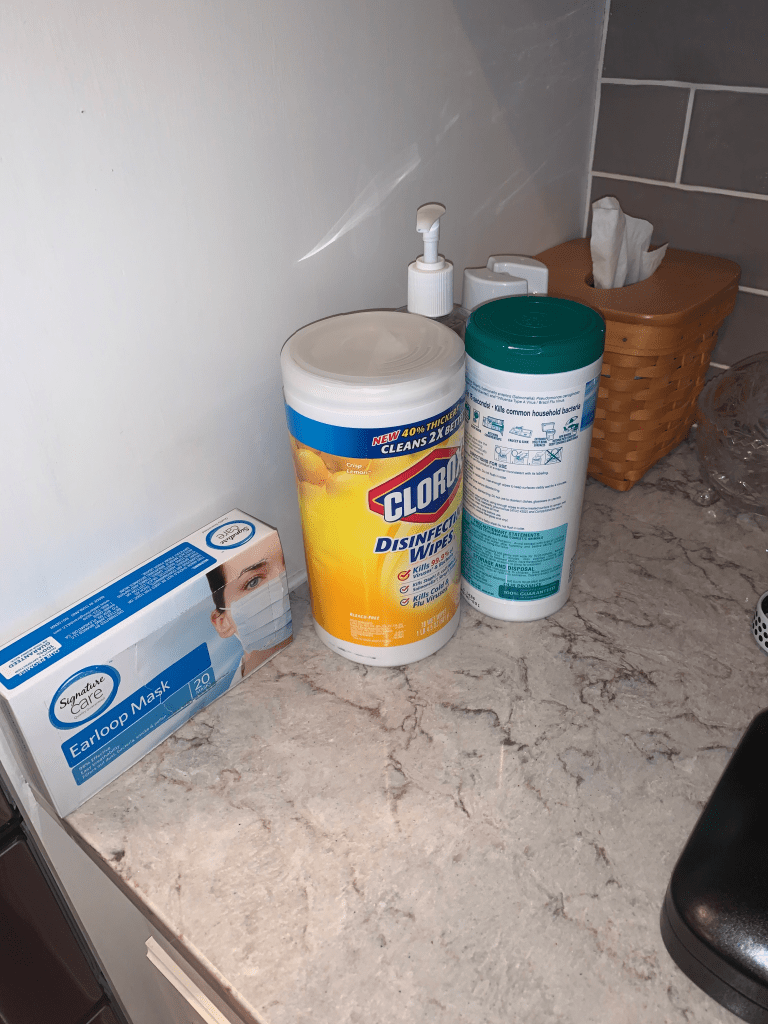
Of all the new normalities arising from the pandemic, the most irritating in my opinion has to be wearing a mask. They become so hot, bothersome, and make me feel like I am being suffocated within minutes of putting one on. But sadly, masks aren’t going anywhere. At least not anytime soon. Some states are making it a requirement to where a mask when leaving one’s home. Right here in Delaware, “Governor John Carney on Saturday issued the thirteen modifications to his State of Emergency declaration, requiring Delawareans to wear face coverings in public settings, including in grocery stores, convenience stores, pharmacies, doctor’s offices, and on public transportation” (“Governor Carney Requires”). Masks are going to be essential and imperative to wear until a vaccine is created as they help protect others from potentially infected people.
On this long road to recovery, the emotional impact of the virus will take time to recover from as well. As our economy begins to re-open, I believe the fear of contracting the virus will leave many people hesitant to start living our normal lives. Without assurance that they are safe, many people will be resistant to getting out and about. With the medias coverage of only the negative sides of the virus, including new cases and deaths each day, this leaves people all over in fear. An article from the National Institute of Mental Health states, “We are all feeling uncertain about what could happen in the coming weeks, as we hope to slow the spread of this pandemic. Feelings of anxiety and uncertainty are completely normal during times like this” (Gordon). Quite frankly, I think everyone has at least a small part of them that is scared to get the virus. It is going to take some time to instill confidence that everyone is safe to go about their normal lives again.
All in all, we have a bumpy road ahead on this path to recovery. The near future may be tough, but with the work of everyone, we will be back to normal in no-time.
Works Cited
Gordon, Joshua. “Coping With Coronavirus: Managing Stress, Fear, and Anxiety.” National Institute of Mental Health, U.S. Department of Health and Human Services, 16 Mar. 2020, http://www.nimh.nih.gov/about/director/messages/2020/coping-with-coronavirus-managing-stress-fear-and-anxiety.shtml.
“Governor Carney Requires Delawareans to Wear Face Coverings in Public Settings.” State of Delaware News, Delaware Government State Information Center, 30 Apr. 2020, news.delaware.gov/2020/04/25/governor-carney-requires-delawareans-to-wear-face-coverings-in-public-settings/.
McNeil, Donald G. “The Coronavirus in America: The Year Ahead.” The New York Times, The New York Times, 18 Apr. 2020, http://www.nytimes.com/2020/04/18/health/coronavirus-america-future.html.
“Social Distancing, Quarantine, and Isolation.” Centers for Disease Control and Prevention, Centers for Disease Control and Prevention, 4 Apr. 2020, http://www.cdc.gov/coronavirus/2019-ncov/prevent-getting-sick/social-distancing.html.
 ENGL110 Spring 2020 11:15-12:05
Everything you said is an annoying but the truth of our situation. My biggest concern is how long it will take for the country to return to a more normal state. We can’t rush opening the country back up because cases will spike again and no one wants that. And it was interesting how you said that no matter how well and slowly we open up, the number of cases will increase. We need to be smart and continue to social distance no matter how painful it gets for us to stay distant.
-Maddy Mengel
LikeLike
I liked how you talked about how uncomfortable masks are. Now that we are home again I am back at work. I wear a mask, plastic face shield, and gloves. It is incredibly uncomfortable to work like that, but it is necessary to maintain my health and everyones around me. Without this gear we would be even more vulnerable to the virus. In terms of the economy, I personally do not see it “booming” for at least a year. People, especially the elderly, are going to be afraid to go out. Non essential purchases are gonna still be at rock bottom for quite a while.
-Mihalis Hrisafinis
LikeLike
I really enjoyed and agreed with your writing. “Of all the new normalities arising from the pandemic, the most irritating in my opinion has to be wearing a mask. They become so hot, bothersome, and make me feel like I am being suffocated within minutes of putting one on.” This quote is something I relate to very much. My mom has been making me put on a mask for everything I do outside the house and I feel so restricted with it on and feel like any conversations I have with people cannot be normal.
-Katie Fallon
LikeLike
“As much as we hate it, social distancing is the new norm. I believe that without a vaccine, we must remain socially distance from one another to effectively stay healthy.” This is an important point to highlight that I think many don’t realize right away. Even after the lockdown has been lifted, people need to realize that social distancing should and will still be around. We can’t just immediately go back to living life like normal after the lockdown is lifted. In fact, this IS the new normal.
LikeLike