
The harsh reality of our situation is that things may never go back to “normal.” Whether or not everyone accepts that fact is still up for debate. Many seem to pride themselves on their ignorance about the coronavirus outbreak, continuing life as if nothing has change. But things have changed. So drastically, that we might not return to normal for years to come. Our healthcare system, economy, social interactions, education, and politics to name a few will be greatly impacted as we attempt to internalize the virus, and dig ourselves out of the hole it has created.
Possibly the most profound adjustments will be made in the healthcare system. As people infected with the virus fill up hospital beds and take precious ventilators, others struggling with less emergent medical issues are pushed to the sidelines. This may be how it is for a while. In the short term future, many doctors are not seeing patients unless their issue is urgent. However, “urgent” is considered life threatening, and many people who need medical care may not be considered urgent. Surgeries are pushed off until further notice, impacting the quality of life of many people who may not “need” the surgery to live. But as we look towards the long term impact of the virus, we will see a shift towards telemedicine. Ezekiel J. Emanuel is chair of the department of medical ethics and health policy at the University of Pennsylvania, and is certain that although telemedicine has lingered on the sidelines of healthcare in recent years, remote office visits could skyrocket in popularity as traditional-care settings are possibly putting more individuals at risk (“Coronavirus Will Change the World”, 2020). This shift would also free up room in hospitals and allow those who need it most to seek care more efficiently. IT professionals have been working on expanding the abilities of this life saving tool since the outbreak took off on March 13th. In two weeks, they were able to transform the system and implement secure networks for thousands of workers in a short amount of time (Bau, 2020). With an emphasis on cybersecurity, these professionals have helped to change how our healthcare system runs. We will undoubtedly rely on their work even as we move out of the hardest stages of social isolation.
As we shut down non-essential businesses and force hundreds of thousands of citizens out of work, our economy’s wellbeing takes a severe plunge. As our economy continues to be devastated, we fall into a deep recession that may take years to escape. Some private-equity companies plan to buy out desirable businesses weakened by the pandemic. This leads to quick consolidation of capital, with fewer companies controlling the economy. In turn, workers and consumers will likely get the short end of the stick (Mull, 2020). The depth, length, and regional dispersion of economic impact is largely unknown, and this uncertainty makes it difficult for governments to know how to intervene to help our economy stabilize (Weller, 2020). We see businesses pulling back, unsure of how long the crisis may be. Families cut their spending, unsure of how their incomes may be impacted by further job cuts (Weller, 2020). So it seems clear that for a while to come, until we know the true extent of the impacts of the virus, our government will be unable to help us in the most meaningful way. The vicious cycle this virus has created in the economy is only exacerbated by its unpredictable nature.
Works Cited
“Coronavirus Will Change the World Permanently. Here’s How.” POLITICO, http://www.politico.com/news/magazine/2020/03/19/coronavirus-effect-economy-life-society-analysis-covid-135579.
Mull, Story by Amanda. “Generation C Has Nowhere to Turn.” The Atlantic, Atlantic Media Company, 22 Apr. 2020, http://www.theatlantic.com/health/archive/2020/04/how-coronavirus-will-change-young-peoples-lives/609862/.
“COVID-19: How the Coronavirus Crisis Will Change the Care Model.” Healthcare IT News, 8 Apr. 2020, http://www.healthcareitnews.com/news/europe/covid-19-how-coronavirus-crisis-will-change-care-model.
Weller, Christian. “What We Know About The Economic Impact Of The Coronavirus And How That Should Guide Policy.” Forbes, Forbes Magazine, 19 Mar. 2020, http://www.forbes.com/sites/christianweller/2020/03/19/what-we-know-about-the-economic-impact-of-the-coronavirus-and-how-that-should-guide-policy/#3147582375f4
 ENGL110 Spring 2020 11:15-12:05
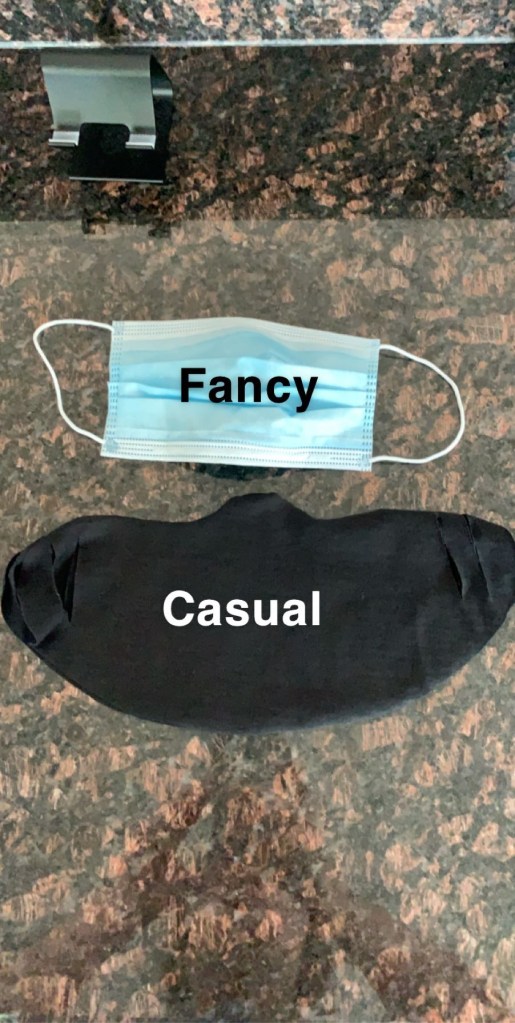
I laughed so hard when I saw the picture attached to this piece. It is kind of true. I really enjoyed reading your commentary on telemedicine communications. I already know many people, myself included, that have had to use telemedicine appointments. Your last sentence is super powerful and wraps up your essay well.
~Helen
LikeLike
I really like your first sentence in your introduction, “The harsh reality of our situation is that things may never go back to “normal.”” It is crazy to think about how much our “normal” day has changed. Everybody’s daily schedules have changed drastically and I personally can’t wait to have my “normal” schedule back. Hopefully as time passes by, our schedules start to change back to normal.
LikeLike
Your first sentence, “ The harsh reality of our situation is that things may never go back to normal” is exactly how I feel about the situation. This is the new normal now. I also really liked how your piece flowed. Words being italicized and in quotations stood out to me and I liked it. The vicious cycle was a great way to interpret what’s going on around us.
-Vienna Iacona
LikeLike
I love the photo used, it is simple but caught my attention and speaks volumes to how the world is going. The reality is, there is so much change happening and no one seems to realize how permanent these changes might be. I found this piece very powerful and a felt a sense of authority as I was reading it.
LikeLike
Going through our blog for our class and trying to decide on which ones I should read and comment on, I knew I had to read yours. Your post took me for surprise because I thought it was going to be mainly about the fact that we have to wear masks since that was your picture. But you took this in a completely different manor and I really liked it. I enjoyed how you went so in depth about the economy and the in between on how hard this is has hit everyone. It really put things into prospective! Thank you, good work!
-Mya Mostrom
LikeLike